The book · 2026
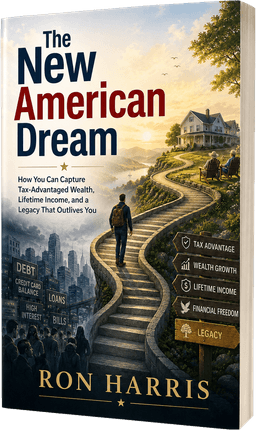
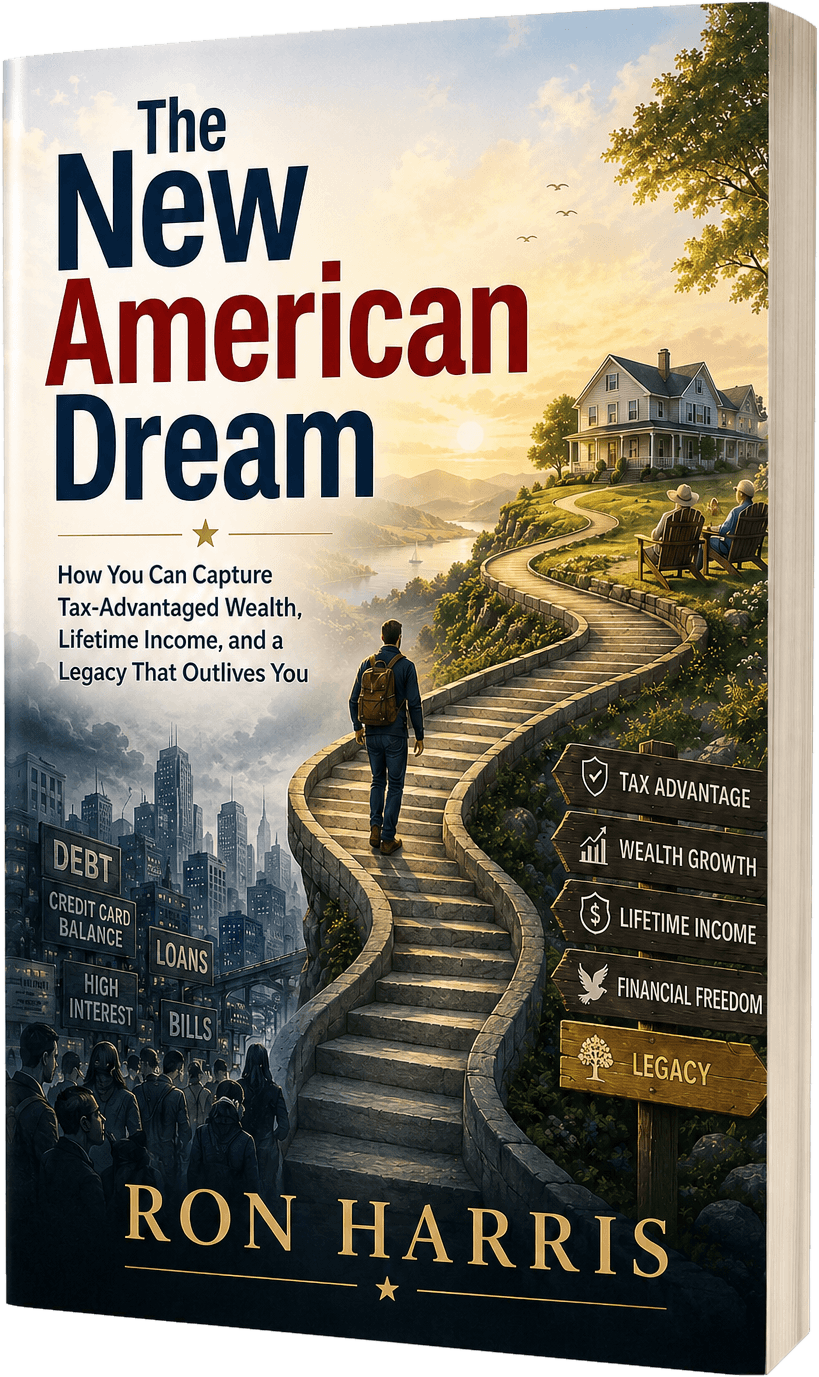
The New American Dream
How You Can Capture Tax-Advantaged Wealth, Lifetime Income, and a Legacy That Outlives You
By Ron Harris, MBA, CFEI, MBE
- Chapters
- 30
- Pages
- 264
- Formats
- Hardcover, paperback, Kindle, audiobook
- Publisher
- Financial Literacy Group, LLC
What the book says
The rules were never explained to you.
You did what you were told. You saved. You funded the 401(k). You paid every bill on time. And you are still not getting ahead.
It isn’t your fault, and it isn’t an income problem. It is a structure problem. For over a century, banks and corporations have built their balance sheets with a specific set of tools: cash-value life insurance, collateral, and spread. Working families were handed a thinner set. Same country, same tax code, two very different outcomes.
Then, in 2021, the door opened. A quiet provision inside the Consolidated Appropriations Act rewrote IRS Section 7702 for the first time since 1984, and the structure the institutions had kept for themselves became available to everyone else.
In The New American Dream, Ron Harris shows what is on the other side of that door: Hybrid Financial Arbitrage, a plan that pairs a properly structured privately owned life insurance policy with debt-optimization technology, so the same dollars now servicing your debt begin building an asset you own, control, and can use while you’re alive.
No get-rich-quick promises. No loopholes. Just the real rules, explained by someone who spent three years finding them.
Inside, you’ll learn
- How banks really make money, and how the same mechanics work on a household balance sheet.
- What the 2021 tax-code change actually did, in plain English.
- How Hybrid Financial Arbitrage differs from Infinite Banking, Bank On Yourself, whole life, and the 401(k).
- The phase-by-phase path from debt elimination to tax-advantaged lifetime income to generational transfer.
- Who this strategy fits, and, just as honestly, who it does not.
Inside the book
Six steps to wealth.
- 1How banks really make money, on a household balance sheet.
- 2What the 2021 tax-code change did, in plain English.
- 3Clear your mortgage in years, not decades.
- 4Turn interest payments into tax-advantaged wealth.
- 5Draw income you can't outlive.
- 6Pass it on whole.

The honest part
Who the book is for, and who should skip it.
Read it if
- You carry a mortgage, a car loan or credit-card balances and want them gone years early.
- You earn a working-, middle- or upper-middle-class income and the 401(k) alone does not feel like enough.
- You want retirement income you can’t outlive, and something left to pass on.
- You will follow a plan for years, not weeks.
Skip it if
- You are looking for a fast win. This plan compounds over years.
- You need every dollar liquid in the short term.
- You want a stock tip. There is none in the book.
- You want someone else to run your finances. The book teaches you to run your own.
The book is equally clear about what the plan costs and who should not use it.
Get the book
Now on Amazon.
Free chapter
Chapter one, tonight
“The American Financial Paradox,” straight to your inbox.
Available at
Questions
Asked before buying.
- What is the New American Dream?
- The same three things the old one promised: a home you own, income you can't outlive, and something to leave your kids. The book argues the dream didn't die, the terms changed, and it lays out the new terms in thirty chapters.
- What is Hybrid Financial Arbitrage?
- A plan that pairs debt-optimization software with a properly structured, privately owned cash-value life insurance policy. The dollars now servicing your debt go to work building an asset you own, control and can use while you're alive.
- What changed in 2021?
- A provision inside the Consolidated Appropriations Act rewrote IRS Section 7702, the rule that governs how life insurance is taxed, for the first time since 1984. The structure banks and corporations had used for a century became practical for a household.
- Is this a get-rich-quick scheme?
- No. There are no loopholes and no shortcuts in the book. It explains the real rules, what the plan costs, how long it takes, and who should not use it.
- Do I need to stop my 401(k)?
- No. The book is not against the 401(k). It explains the limits of traditional retirement accounts and shows what a second, tax-advantaged structure adds alongside them.
- What formats does it come in and where can I buy it?
- Hardcover, paperback, Kindle and audiobook, published in 2026 by Financial Literacy Group and sold on Amazon.